Oshosi Handmade Bows: Building a Website for a BC Bowyer
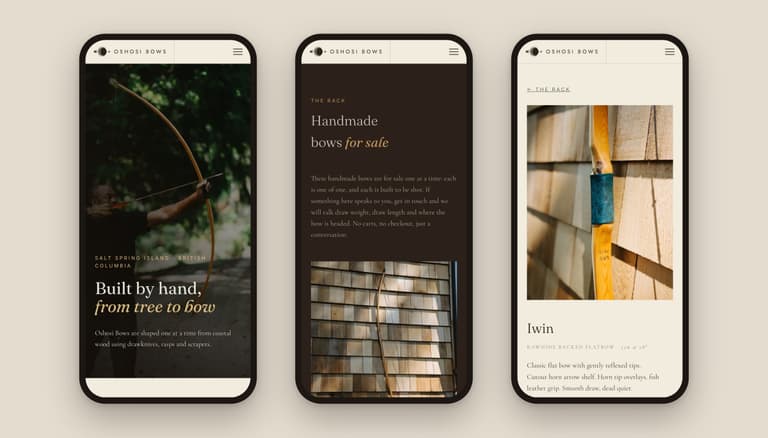
Oshosi Handmade Bows is Christopher Applewhaite's workshop on Salt Spring Island. We made the photographs and built the website that carries his bows.
Oshosi Handmade Bows is the workshop of Christopher Applewhaite, a traditional bowyer on Salt Spring Island who builds wooden bows entirely with hand tools. We made the photographs and built the website, oshosihandmadebows.com, and this is how it came together.
Christopher splits and seasons his own staves, often for years, before a bow is ever roughed out of them. The site had to show that patience plainly, bring the right people to him, and be something he could run himself between days at the bench.
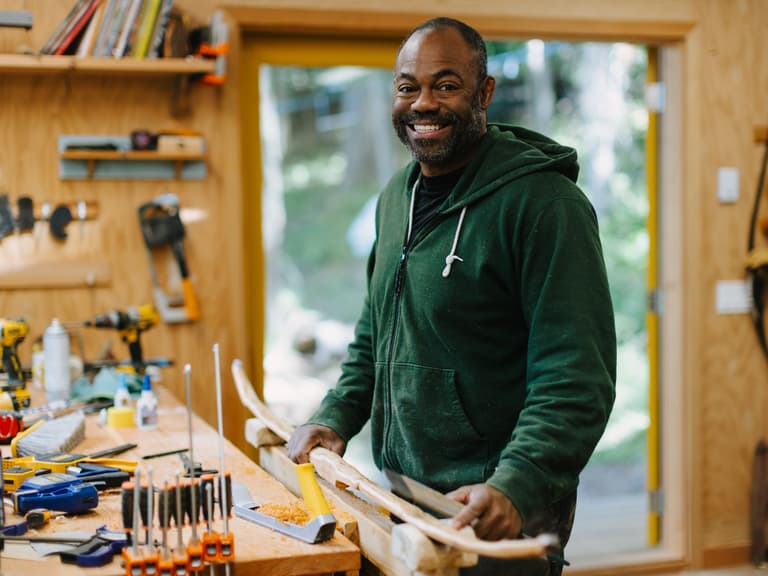
Who is behind Oshosi Handmade Bows?
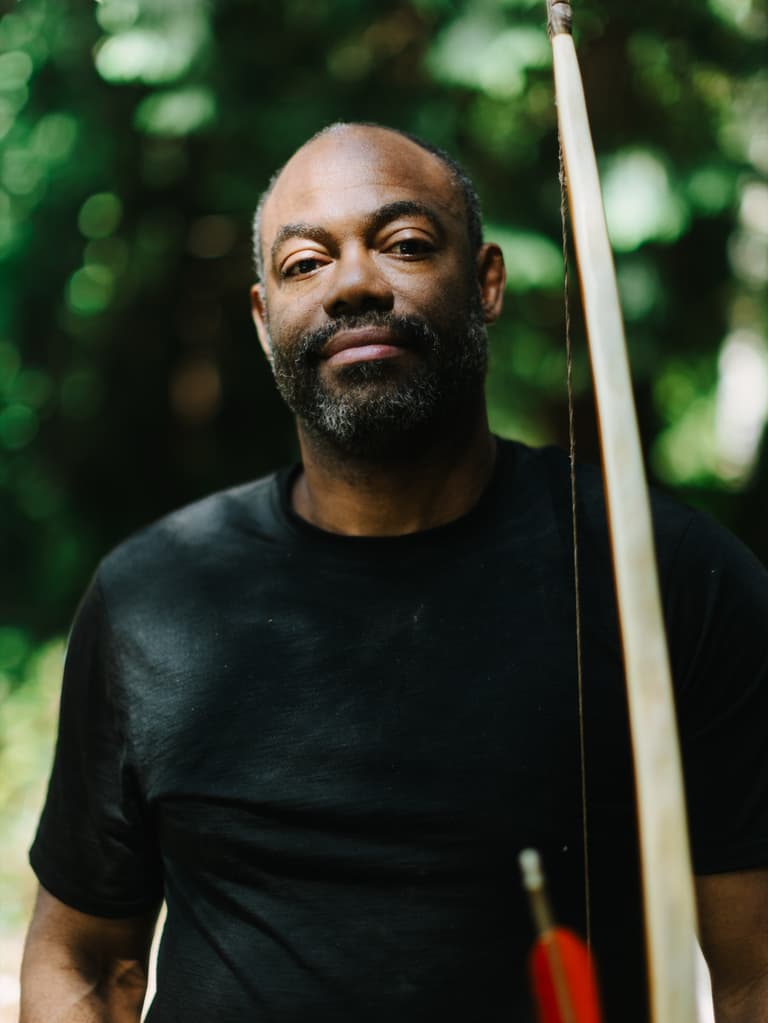
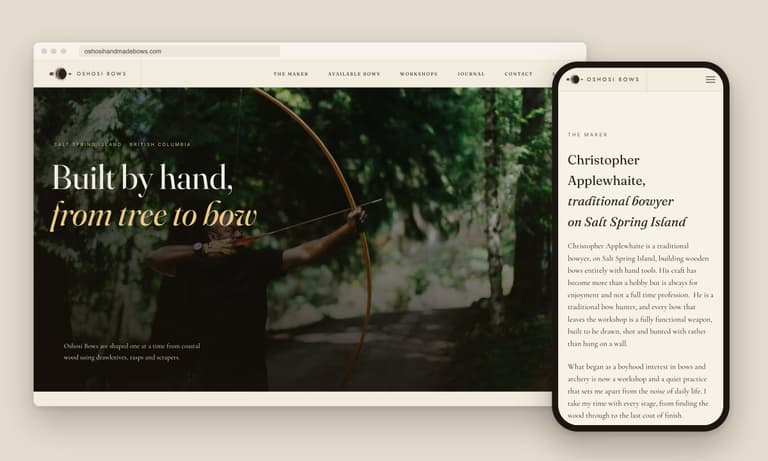
Christopher has been drawn to bows and archery his whole life. He is a traditional bow hunter who also shoots for the pleasure of it, and in his own words the craft is done for enjoyment rather than as a full-time profession. That shaped the website more than anything else. There is no sales team and no stock room behind it: one maker, a rack of finished bows, and seasoned staves waiting their turn. The site needed to sound like him, not like a shop, and he tells his own story on the maker page.
Every bow that leaves the workshop is a functional weapon, made to be drawn, shot, hunted with and enjoyed.
— Christopher Applewhaite
How are these BC handmade bows made?
Christopher's preferred wood is Pacific yew (Taxus brevifolia). Its sapwood is strong in tension and its heartwood strong in compression, so a yew stave carries a natural laminate of its own. It is also increasingly scarce, and most of the yew he works was salvaged ahead of logging, where it would otherwise have been left behind and burned. He also works ocean spray, plum, locust, maple and selected imported woods, along with horn, rawhide, sinew and leather.
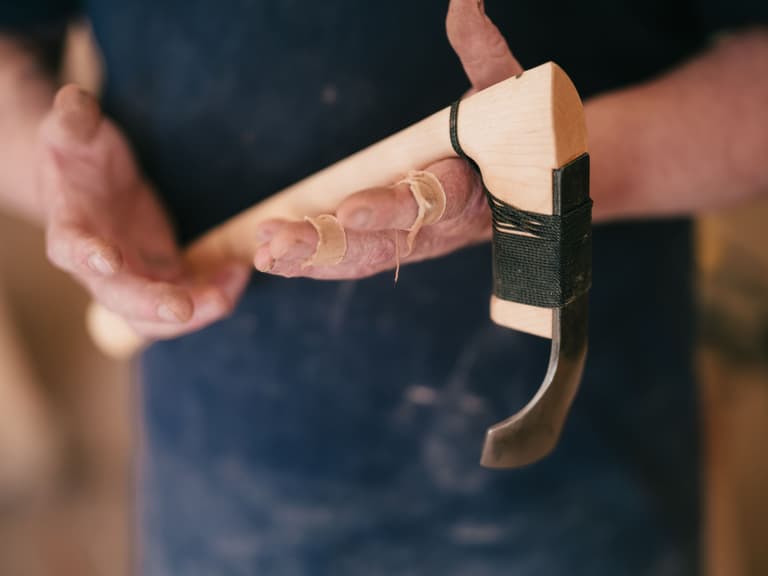
A bow is roughed out with a hatchet and drawknife, brought closer with a rasp and scraper, and then tillered: it goes back and forth between the tillering tree and the bench many times, until the draw weight and the bend of the limbs are right. That is days of active work spread over weeks, on top of the years the stave has already spent seasoning.
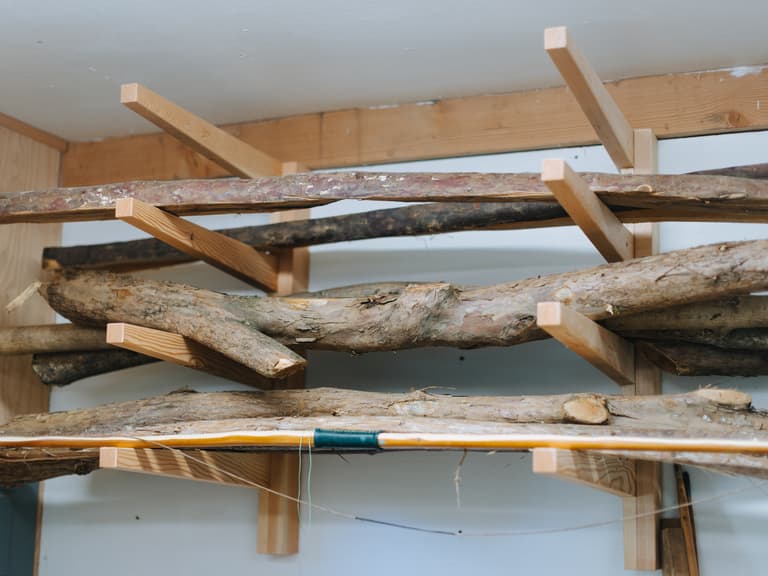
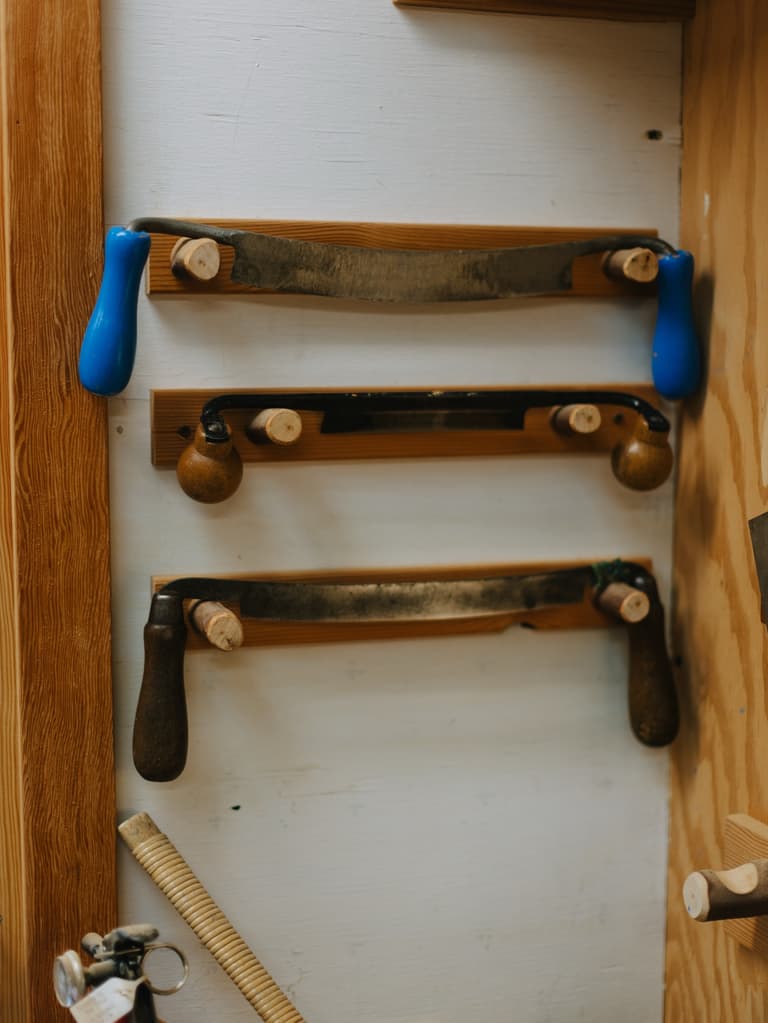
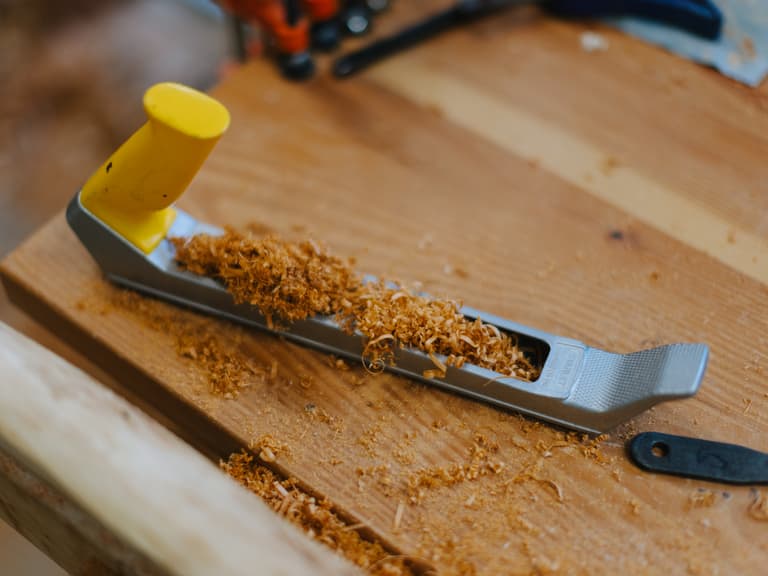
Photographing the workshop
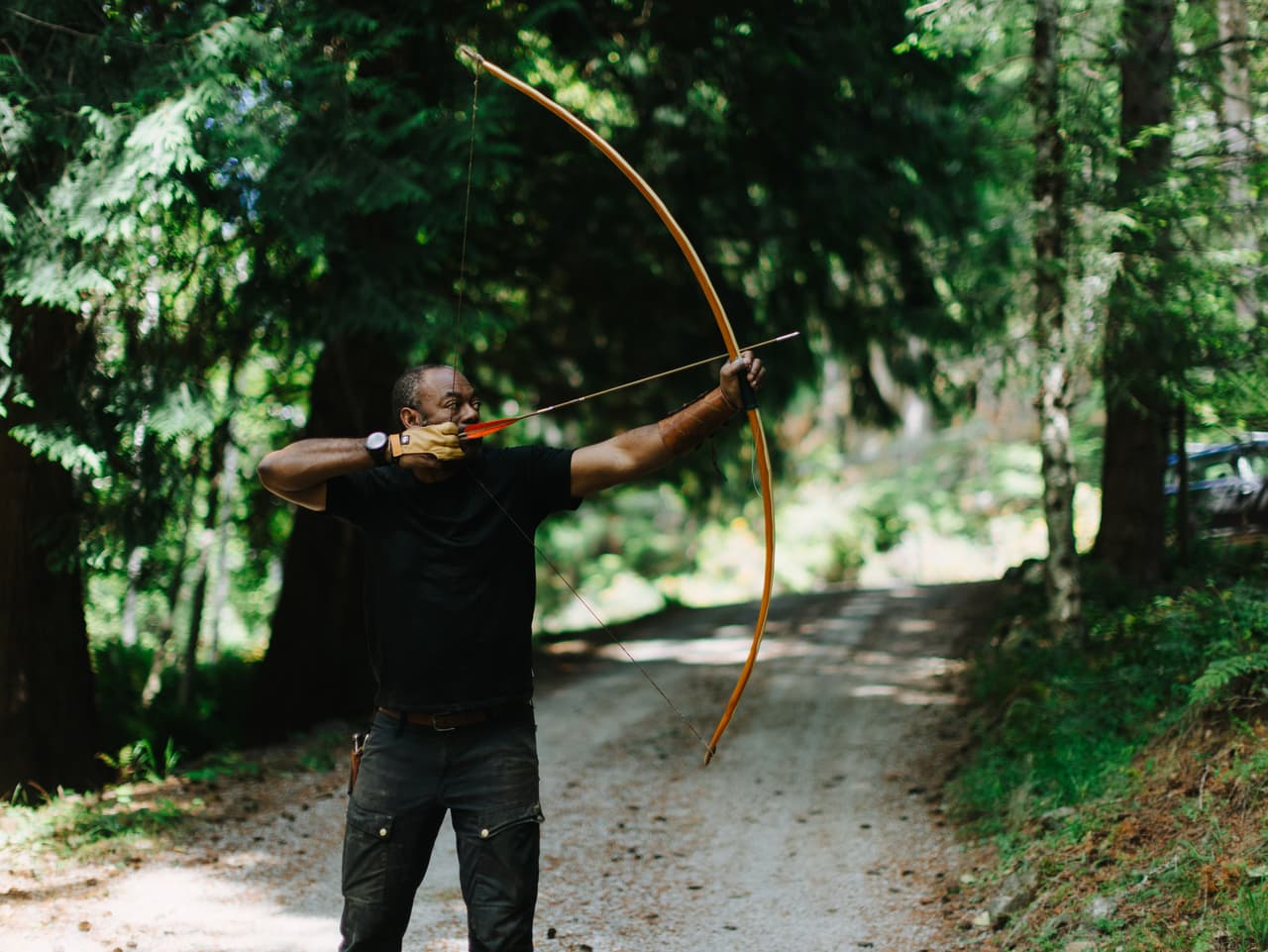
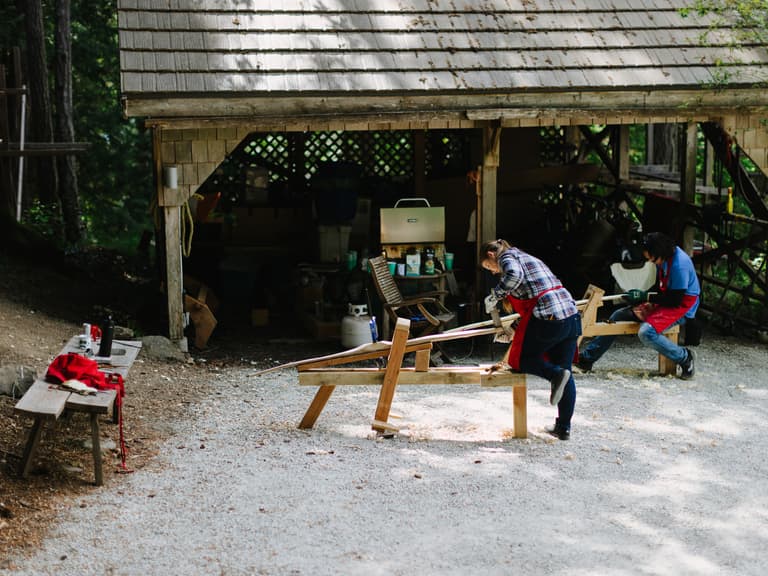
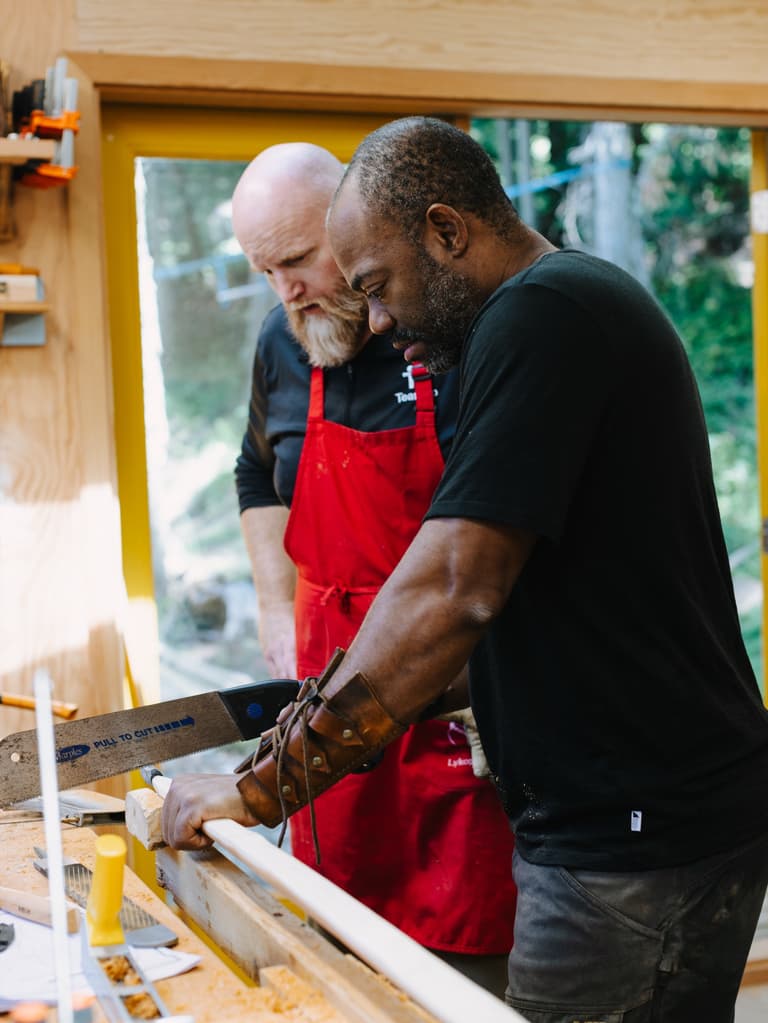
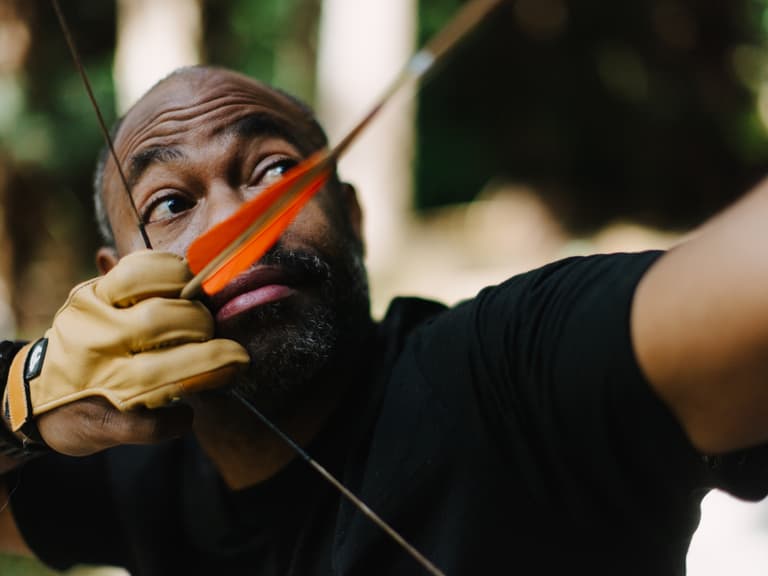
The site is built around photographs Sydney made in and around the shop: staves on brackets overhead, tools on the wall, shave horses under the pavilion on a workshop weekend, and Christopher drawing a finished bow on the road through the trees, which became the first thing anyone sees on the home page. It is the same slow, available-light way we approach all our portrait and documentary photography, and it sits alongside other makers we have photographed at their work, like Coast Salish carver Beau Wagner. Their stories are in the journal too.
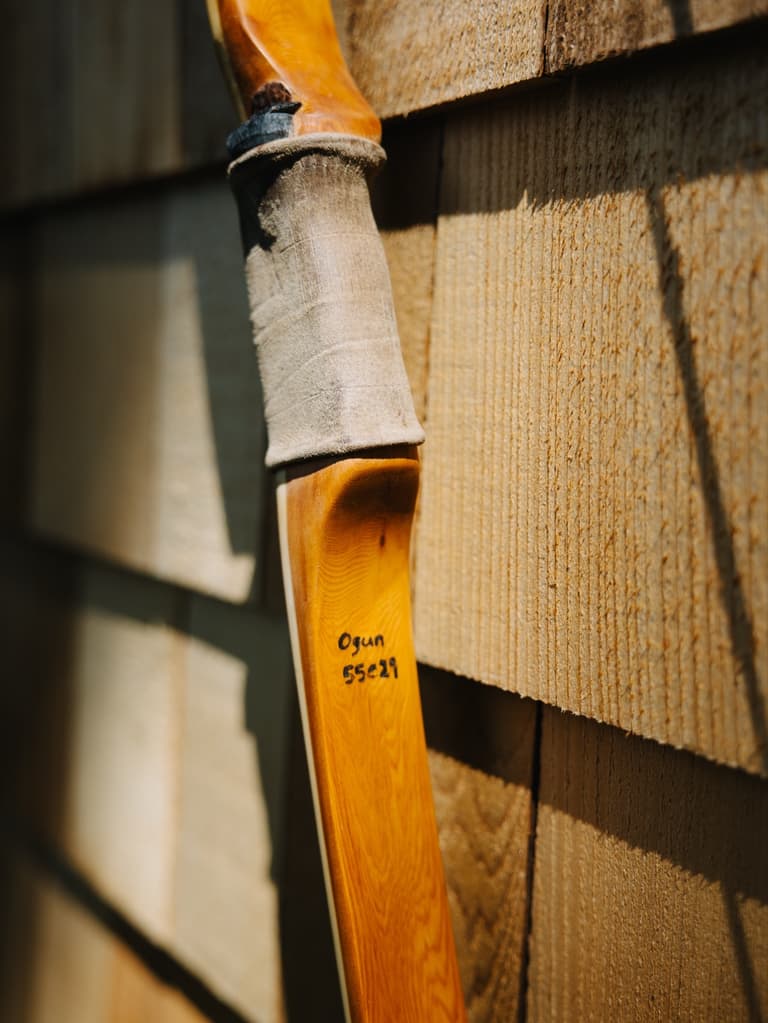
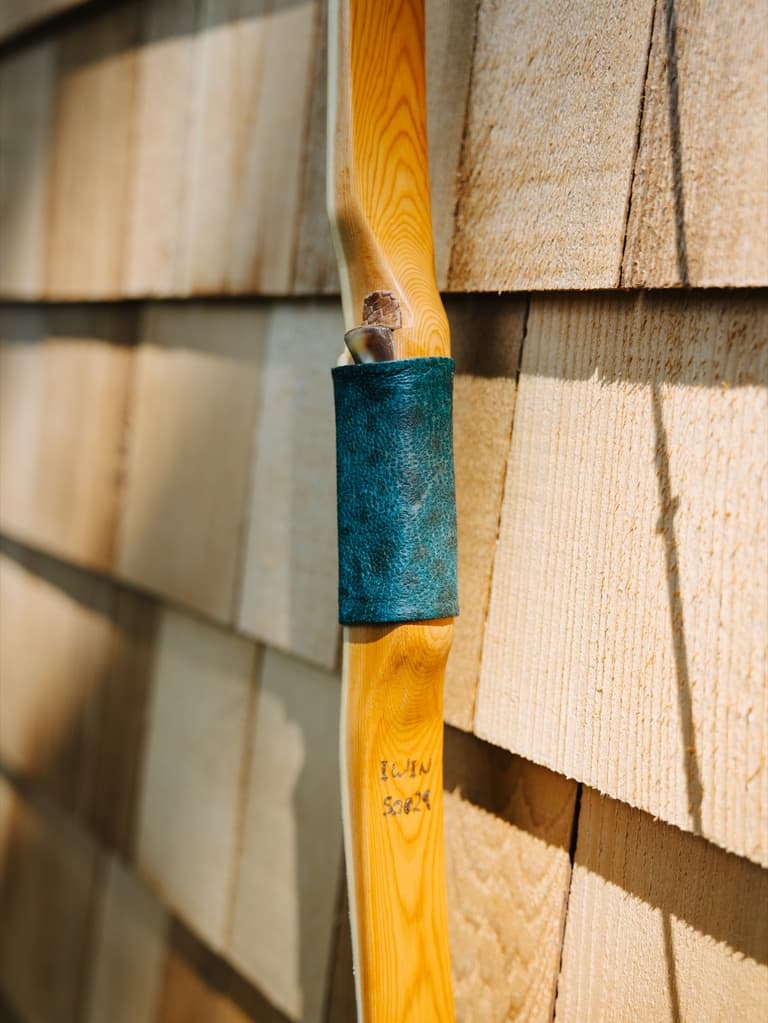
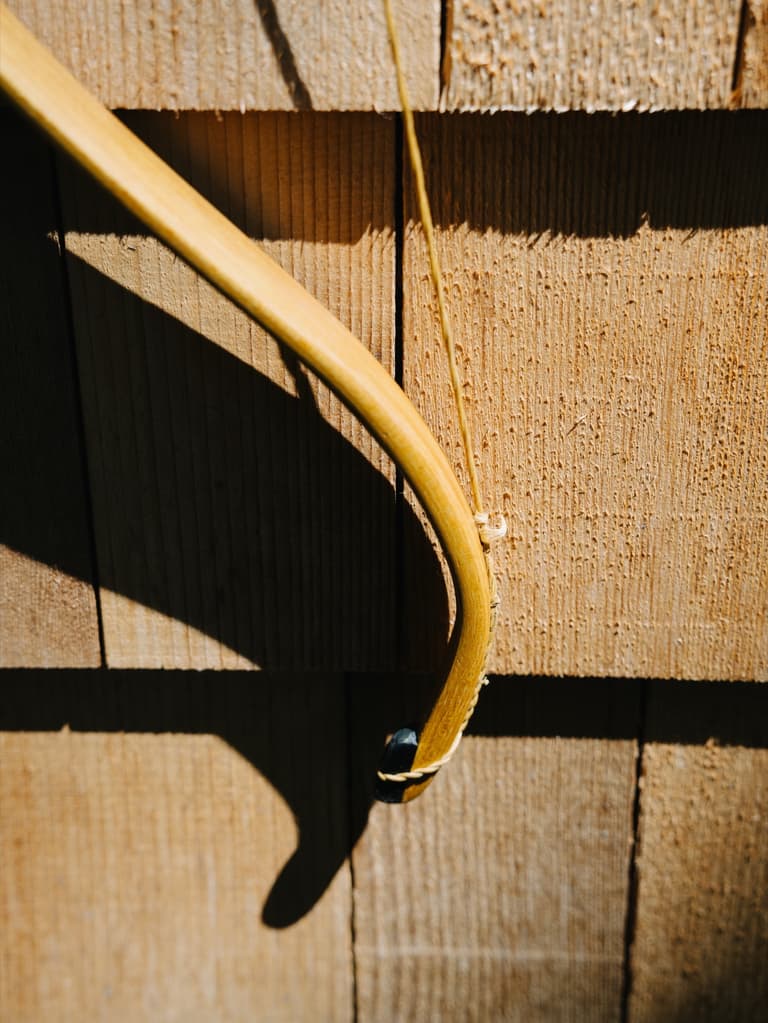
The bows themselves were photographed against the same cedar shingles, in the same raking light, so the rack reads as one collection as bows come and go. Close frames of grips, nocks and limb tips do the work a spec sheet cannot: they show the grain, the finish and the hand that made them.
Why doesn't the Oshosi Handmade Bows site have a checkout?
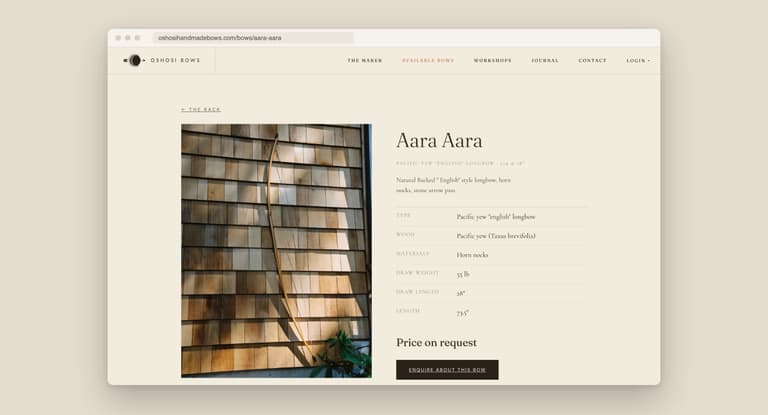
Because a bow is fitted to a person the way a pair of boots is. Draw length, draw weight, how someone shoots and what they shoot at all change which bow is the right one, and sometimes the answer is none of them. So the rack of BC handmade bows is a showcase rather than a store. Each bow has its own page with its wood, materials, draw weight, draw length and several photographs to page through, and every one ends in the same place: a button that starts a conversation with Christopher.
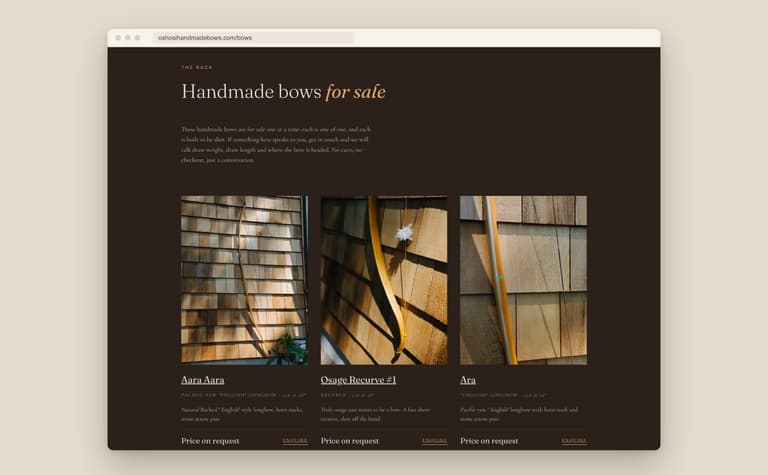
Sold bows stay on the rack, marked as sold, because the rack is also his portfolio. A bow can be marked reserved while a conversation is under way. If Christopher renames a bow, its old address keeps working, so a link somebody saved still lands where it should. And when nothing on the rack is right, the same conversation simply becomes a commission.
What happens when someone enquires?
An enquiry does not disappear into an inbox. It opens a private conversation page for that person, reached from a link in their email, with no account to create and no password to remember. Christopher answers from the workshop's admin, and his reply arrives as an ordinary email with his own address to reply to. The customer can answer straight from their inbox, photographs included, and it all lands in the same thread. If someone goes on to buy or commission a bow, Christopher can give them a sign-in to a small client portal, and the conversation carries on there unmoved.
Making sure no enquiry goes unheard
The part we cared about most is that nothing goes unheard. Every message is recorded along with whether its notification actually went out. If an email fails to send it is tried again, and anything still stuck shows as a warning in the admin until someone deals with it. For a one-person workshop a missed enquiry is a missed bow, so this is the part of the build with the least left to chance. It is the leads and enquiries module we run on our own sites, cut down to one conversation per person.
Running the site from the workshop
Christopher clicks the page and types. Headings, paragraphs and photographs are edited in place, so what he sees while editing is what a visitor gets. Text can be resized and nudged into position, and a change made on a laptop is kept apart from the phone layout, so arranging something on a big screen cannot knock the phone version out of line. Adding a bow is a short form: name, type, wood, draw weight and length, a price if he wants one shown, and as many photographs as he likes.
Photographs go into a library with folders and stay there to be used again. Large files straight off a phone, iPhone photographs included, upload without fuss. The journal saves the whole post from one button and warns before anyone leaves with work unsaved. A first sign-in opens a short guided tour of the admin, so nothing has to be learned from a manual.
Helping people find Oshosi Handmade Bows
Every page carries two scores in the admin: one for search engines, and one for how readily an AI assistant can quote it, each with its fixes spelled out. Before launch, the maker, bows and workshops pages were brought from around 50 to the mid-90s. Each carries a short set of real questions and answers, marked up so search engines and assistants can read them as such, and a sold bow is marked as sold out in the data search engines read.
Speed counts on a site that is mostly photographs. Each photograph is sized for the screen it lands on, which took the home page on a phone from 4.9 MB to about half a megabyte. Search Console and analytics were connected at launch, and the database behind the site sits in Canada.
Built for one maker to keep running
Oshosi Handmade Bows runs on the same Foundation as this site, with only the parts a bow maker needs switched on: the pages and editor, the rack, the journal, the enquiry conversations and a small client portal. Bookings, payments and client galleries would only have been clutter for Christopher, so they were left out. That is how we approach websites for creatives and small businesses: start from what the work needs, make the photographs for it, and hand over something the maker can keep running. If you make things, on the island or anywhere else, and want to talk about a site of your own, start a conversation, or come and see us at the studio on Salt Spring Island.
Where can I buy Oshosi Handmade Bows? +
Through oshosihandmadebows.com. The bows available now are on the rack there, each with a button to ask about it, and Christopher talks through draw weight and draw length before anything is confirmed. Bows ship from Salt Spring Island across Canada and to the United States, or can be collected at the workshop.
Does Christopher make bows to order? +
Yes. When nothing on the rack suits, a commission starts the same way, with a conversation about how and where you shoot. He keeps seasoned staves on hand, so a commissioned bow usually starts from wood that has already been waiting years for it.
Can I learn to make a bow at Oshosi? +
Christopher has run bow making workshops on Salt Spring Island in small groups, where each person leaves with a bow they roughed out, tillered and shot themselves. Get in touch through his website to ask about future dates.
Who made the Oshosi Handmade Bows website? +
Folklore Creative Company, a photography, film and website studio on Salt Spring Island. We made the photographs, designed and built the site and its admin on our own platform, and continue to look after it.