Beau Wagner, Coast Salish Carver, Reading the Grain of Red Cedar in an Older Rhythm
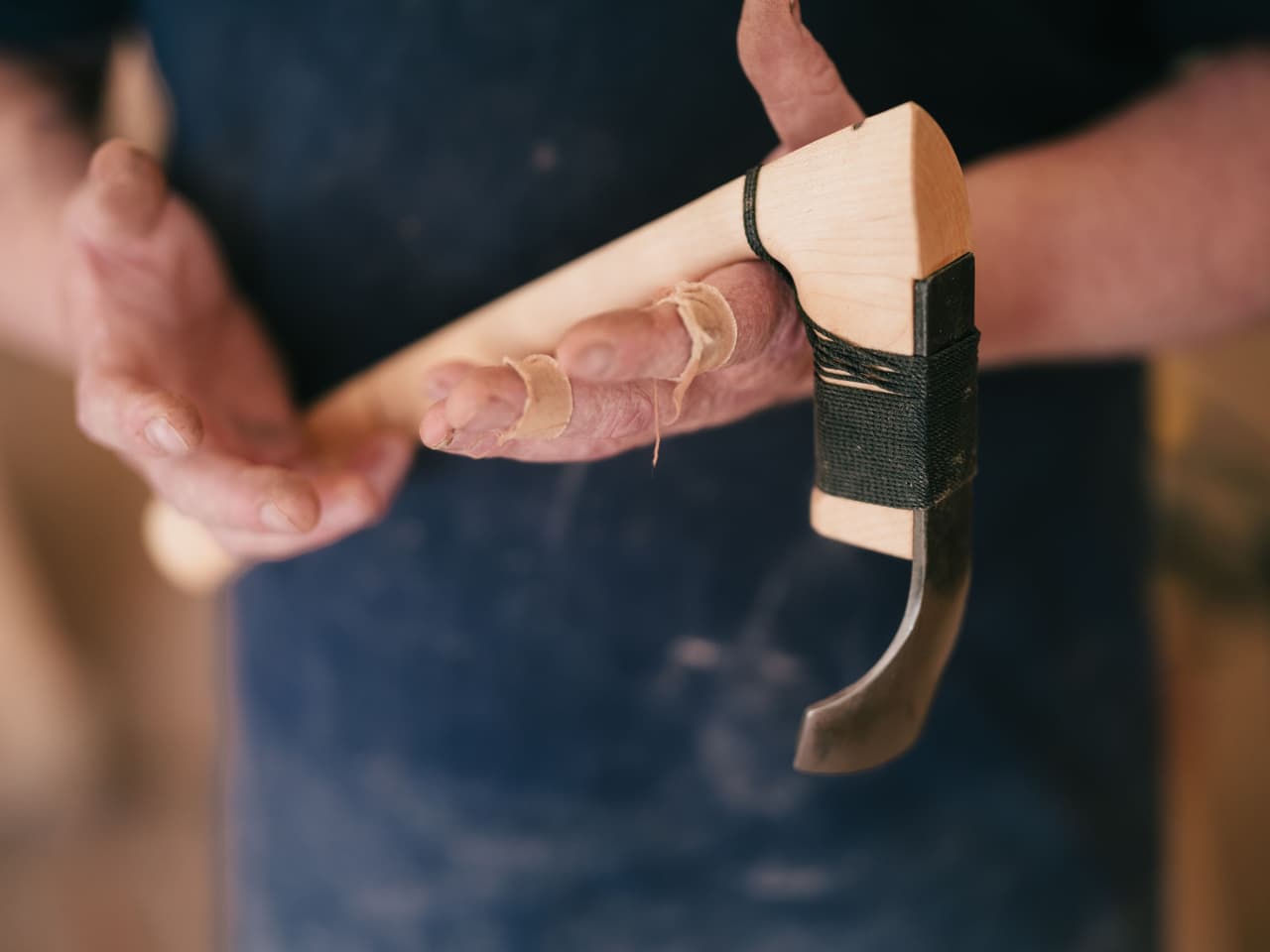
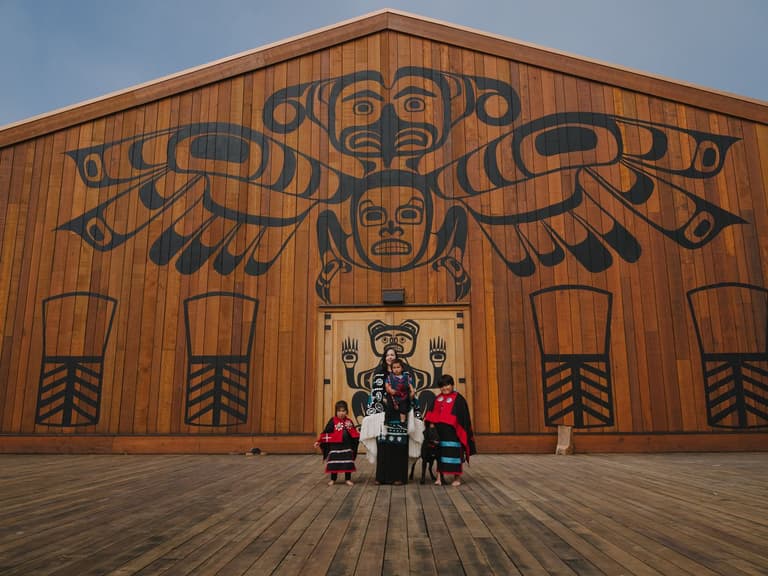
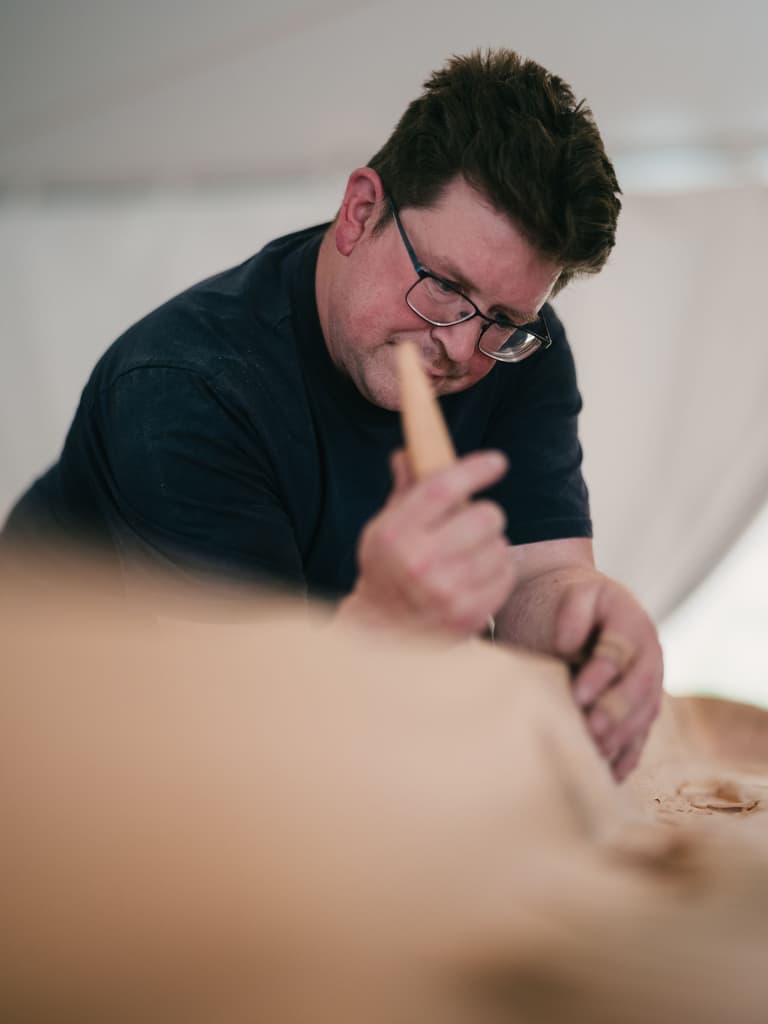
A quiet afternoon photographing Coast Salish carver Beau Wagner, who has spent more than thirty years shaping red cedar into canoes, masks, and paddles along this coast.
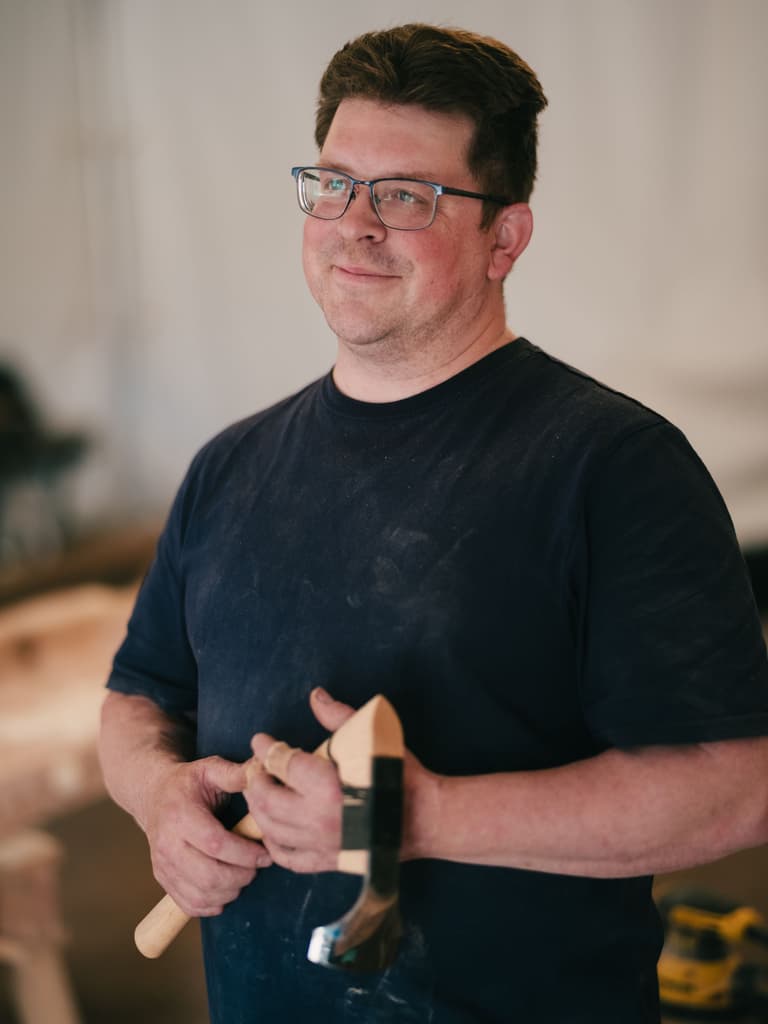
Beau Wagner is a Coast Salish carver from Nanaimo, British Columbia, who shapes Western red cedar into dugout canoes, masks, paddles, and welcome posts. We spent an afternoon photographing him at his work, and this is a photo story about the man and the wood he reads.
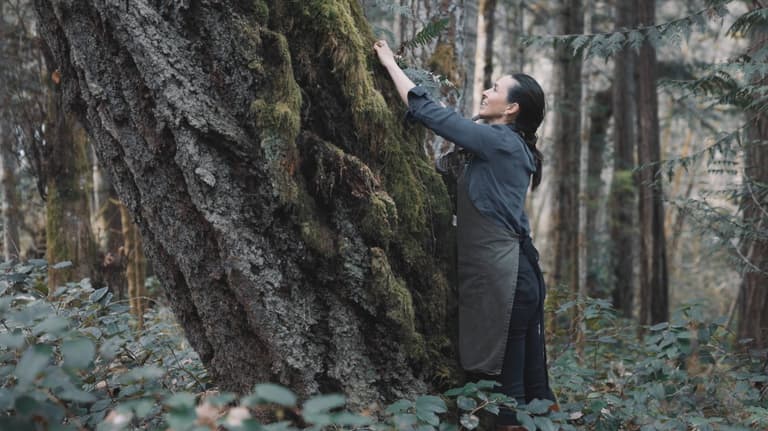
Beau has spent more than thirty years shaping x'pey, Western red cedar, into dugout canoes, masks, bentwood boxes, welcome posts, rattles, and paddles. We spent an afternoon photographing him at his work, and what stayed with us was the pace of it: a rhythm older than any of us, set by the grain of the wood and the tools in his hands. You can see his own account of the work on his site, Beau Wagner Art.
Who is Beau Wagner?
Beau is a Coast Salish canoe carver and artist, born and raised in Nanaimo, British Columbia. He began carving wood as a young child and built his first skin-on-frame kayak at fifteen, drawn to the ocean and the healing he found on the water. Later he trained as a shipwright before returning to the Land through cedar. He describes himself as someone who walks in two worlds, and his art, in his words, echoes stories from the Land.
How did he learn to carve?
He apprenticed under Stz'uminus Elder and Master Carver ShYa'QuThut, Elmer Sampson, who welcomed Beau into his home and named him a relative. Beau lived off the Land with his teacher for five years, learning sacred teachings and the snawayalth (wisdom) shared with him while carving at Thuqmin, Shell Beach, until ShYa'QuThut's passing. As a descendant of residential school survivors, Beau carries that history with him into the work, and much of what he does now honours the man who taught him.
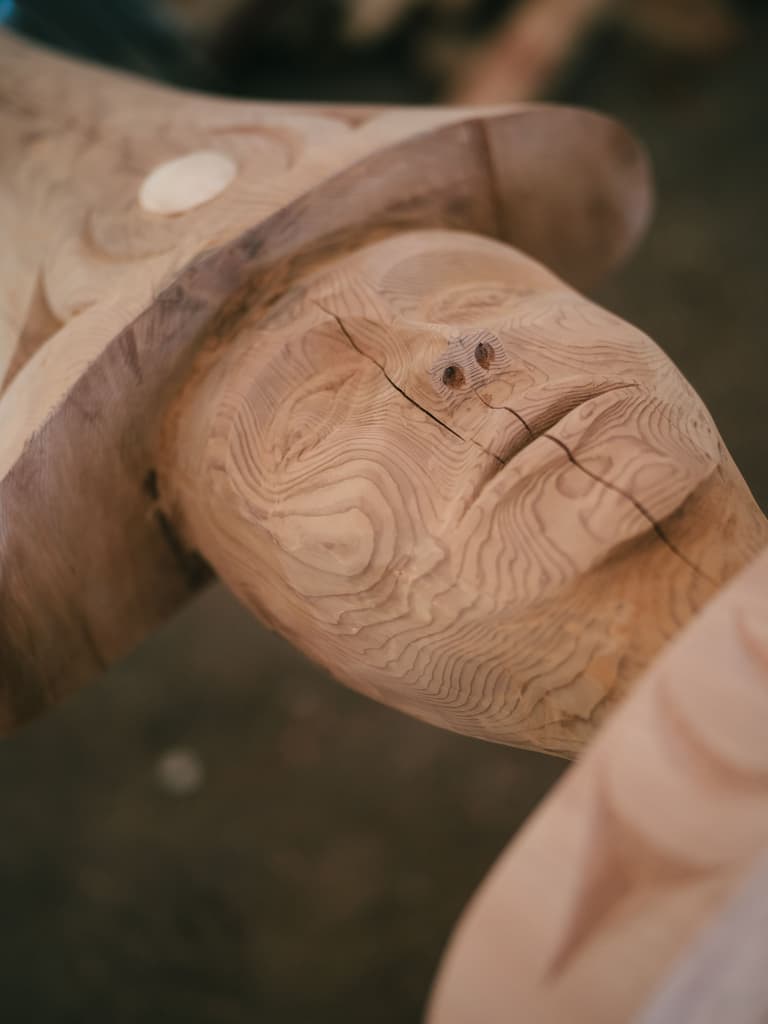
Cedar is full of magic from the earth and stars; each growth ring holds power, gratitude, humility, and community.
— Beau Wagner
Why does cedar matter to a West Coast Indigenous carver?
For this West Coast Indigenous carver, the x'pey is not just a medium, it is a relative: a living, breathing being with a spirit that is transformed through carving, energy, and ceremony into other forms. The cedar he works is responsibly and respectfully harvested from sustainable sources, and his art is derived from the Land and the stories of his people, who have lived here since time immemorial. Watching him read the grain, you understand that the wood is a partner in the work, not raw material.
What does a Coast Salish carver make?
Beau's pieces range from small carvings to major works, and his public art is on display or in daily use at Snaw-Naw-As school, Gabriola Elementary School, Stz'uminus Community School, Tillicum Lelum Aboriginal Health Centre, Cowichan School District, Qualicum First Nations, and the Footholds Therapy Centre in Nanaimo. Alongside the carving he runs land-based education and wellbeing programs, working with thousands of students of all ages through Cedar and Me field trips, in-class carving workshops, medicine walks, and cultural talks tied to the BC Curriculum and the First Peoples' Principles of Learning.
The Healing Canoe and the film
Since spring 2019 Beau has offered the Healing Canoe Program, carving canoes with students across the school year, with a vision of reinvigorating canoe-carving culture through a fleet built at Thuqmin. His film, Our Teacher, follows him carving a canoe on Gabriola Island with local elementary students in September 2021; it was a Salt Spring Film Festival winner in 2024 and is available online. It felt right to make these images near our own island home, and this is the kind of work we like to keep on the studio journal. If carving draws you in, we have also spent time with Joe Johnny, a Port Hardy carver, and carver Howard La Fortune.
Photographing the work
Sydney made these frames the way we approach most of our portrait and documentary photography: slowly, in available light, letting the subject set the pace. There was no need to arrange anything. The shavings gathered, the tool found its line, and the cedar smelled of the forest it came from. If you would like to see how we work with people and place, you can read more about the studio on Salt Spring Island, or look through our film work and hand-poured tintype photography.
Who is Beau Wagner? +
Beau Wagner is a Coast Salish canoe carver and artist, born and raised in Nanaimo, British Columbia. He has been carving for more than thirty years, working red cedar into canoes, masks, bentwood boxes, welcome posts, rattles, and paddles.
Who taught Beau Wagner to carve? +
He apprenticed under Stz'uminus Elder and Master Carver ShYa'QuThut, Elmer Sampson, who welcomed him as a relative. Beau lived off the Land with his teacher for five years, learning sacred teachings while carving at Thuqmin, Shell Beach.
What is the Healing Canoe Program? +
Started in spring 2019, the Healing Canoe Program has Beau carving canoes with students over the school year, with a vision of reinvigorating canoe-carving culture through a fleet built at Thuqmin, Shell Beach.
What is the film Our Teacher about? +
Our Teacher follows Beau carving a canoe on Gabriola Island with local elementary students in September 2021. It was a Salt Spring Film Festival winner in 2024 and is available to watch online.